


Friday, January 29, 2010
I've not been keeping up lately with the blog. So sorry. I'll try harder.
Basically coming on today to tell you I'm most likely going to be disappearing from the Internet for a few days. We are expecting somewhere in the realm of 16 inches of snow here in the next 24 hours. I take it a foregone conclusion that Newport Utilities will be unable to keep the power on.
But I'm ready this time. Took an overly long hot shower. Filled the tubs with water and filled extra jugs for dog and drinking water. Pulled down the hurricane lanterns--forgot to restock candles so the lanterns will have to do. Shame, since candles give much better light for reading--the only thing to do here when power goes out. Though I do have a lot of yarn I'm spinning and will be able to do that in the dim light--and knit on my knit only projects. Light gets too dim for counting rows. I cleaned the house, since it gets impossibly dirty when the power goes out for days. Have ramen noodles, camp coffee pot and foil and potatoes to cook on the stove. A rick of wood on the porch stacked. Did the laundry so I have clean wool socks, long underwear and sweaters. Clean wool socks make me happy.
So. Here I am awaiting the inevitable blackout. It gets so cold in the house and I think I'm supposed to be stying off my feet. But I'll be schlepping firewood instead. Left leg has gone all hinky and I'm thinking clot. I'll get it looked to when the roads clear and I take the meds they'd give me in the hospital anyway so there's not much else that can be done. I don't mind the cold and snow--it's just the unreliable utilities that depress me.
I'm hoping they'll be able to keep the power on through the night, but it is Friday--aka Drunk Hillbilly Night. Every Friday people get together here to drink rottgut at people's houses--at least that was what Scott used to do. It's not actually a social event--it's just to get drunk. So that combined with the weather is going to take out a few utility poles.
But the frogs woke up twice this past week! So spring can't be that far away, can it?
Tuesday, September 04, 2007
I was talking to this woman one day and since the wasps are very aggressive this time of year, we started talking about wasp stings. I’d said that I seemed to be getting more and more sensitive to them. My recovery time after getting stung is getting longer and I seem to have more difficulty breathing afterwards.
I hadn’t had many encounters with stings before. I’d had the odd yellow jacket sting and a few bee stings as a child, but since moving here, it has become something that happens fairly often.
“Well, there were a traveler who were visiting when I was a girl.” She said to me.
“I got stung right bad by a big ole wasp and he took a root out of his pocket and told me to chew on a piece of it. H’it’ were shaped just like a rattlesnake’s rattler and he called it snakeroot. I took just a bead off of it and chewed it and was all better very soon.”
She identified the root as being snakeroot.
Well, there are a gang of plants called “snakeroot’. Most of them got the name by being considered a treatment for snakebite at one time or another.
I’ve been trying to find her snakeroot based on her description of the shape of the root, but have come up empty. There are several possible candidates. The most obvious would be Aristolochia serpentaria or Virginia Snakeroot.
James Mooney says in his Sacred Formulas of the Cherokee which lists some of the plants used locally:
UNASTE’TSITIYU ~ “very small root” ~ Aristolochia serpentaria – Virginia or black snakeroot: Decoction of root blown upon patient for fever and feverish headache, and drunk for coughs; root chewed and spit upon wound to cure snake bites; bruised root placed in hollow tooth for toothache, and held against nose made sore by constant blowing in colds. Dispensatory: “A stimulant tonic, acting also as a diaphoretic or diuretic, according to the mode of its application; ***also been highly recommended in intermittent fevers and though itself generally inadequate to the cure often proves serviceable as an adjunct to Peruvian bark or sulphate of quinia.” Also used for typhous diseases, in dyspepsia, as a gargle for sore throat, as a mild stimulant in typhoid fevers, and to promote eruptions. The genus derives its scientific name from its supposed efficacy in promoting menstrual discharge, and some species have acquired the “reputation of antidotes for the bites of serpents.”But Virginia snakeroot doesn’t have the root structure of the plant I’m looking for.
 I’m thinking a much better candidate would be Polygala senega L. or Seneca Snakeroot. This plant would have the root structure I’m looking for and has a common name of “rattlesnake root”. It’s a much better fit. I’ve seen both of these plants growing here in the mountains and know they would be available.
But I’m still sort of bemused as to why either would be given for a wasp sting, unless there was some sort of respiratory distress involved. I can see a sort of sympathetic magic justification for the Seneca. And wasp stings are self -limiting as long as there is no allergic reaction.
What do you think? Any herbalists out there with any ideas as to what she was talking about?
*****************************
Disclaimer! Please don't try to go and recreate any of the traditional cures that I talk about on the blog unless you are quite sure you know what you are doing and take full responsibility for doing so. I just collect them. I don't actually use them. Some herbs previously in common use have been found to have harmful effects. And some of them are quite deadly.
Sunday, July 15, 2007

An Old "Footlog"
It's the ruin of one of the original "footlogs".
I hope you are having a very happy Sunday.
Wednesday, June 06, 2007
I saw her across the crowded dirt track that was the thoroughfare of Morristown, Tennessee's First Monday Market. I had just had to convince my friend to NOT buy me a trio of ducklings. I was disarmed by the little bundles of fuzz as always, but remembering how taxing it is to brood waterfowl, I didn't want to bring them home with me. Plus, they needed special un-medicated feed and I didn't have a brooder set up. So I left the three baby Muscovy's there with some reluctance.
I turned and saw her. Her carriage was part of what drew my eye to her. She was thin like a reed with narrow shoulders and seemed to sway with a wind that only she could feel. Her smile was soft and sweet. She stood behind a booth fashioned from two card tables stuck together and planks that rested on the bed of the farm-weathered pick-up truck. She had a pile of T-shirts and some dolls laying out on the table. Some of the dolls were complete and some were just bodies and heads laying about like infants at a crime scene.
You know the sort of doll. It's a plastic doll with an over-sized head that has been lovingly dressed up in doilies and crocheted bits of garb. You don't play with these dolls. I'm never quite sure what you really are supposed to do with them other than show them off at the craft section of the county fair. I've seen their lower bodies removed so the bell-shaped skirt can be a tea cozy or hide a tissue box.
I smiled shyly at her and asked, "Did you make these?"
She looked very closely at my mouth as I spoke and I realized she was nearly deaf.
She brushed her wispy hair from the side of her face. "No, I jess picked them up at auction."
I knew what she was talking about. I liked to attend the auctions too. They will sell stuff in lots and one lot might have one thing that you are highly desirous of and everything else is just junk. I once picked up a bronze Chinese gui vase that someone had mistaken for a tractor part at auction but had to buy quite possibly the ugliest hand crocheted afghan in the world along with it. I sold it on EBay, labeling it, "Ugliest Afghan I've Ever Seen." I couldn't believe someone bought it.
She had a darkening bruise on the side of her chin that she reached up and stroked self-consciously. She felt compelled to explain it to me. I think she knew what it must look like.
"Well, I was chasing the great grandchild an' trying to keep up with him and I slipped on the wet grass. It could have been worse, I might have broken something."
I agreed with her and I did believe she has slipped and fallen. I couldn't imagine anyone striking such a delicate and lovely old woman. As if he had heard, a jovial male voice boomed from the side of the old pick-up.
"She showing you where I clocked her one?"
He was like a trim, jolly, Appalachian Santa with his snow white beard and rosy complexion. He was 78 by his own admission. He still had some of his own teeth left though they weren't in the greatest of shape. But there was nothing sinister in the grin he seemed to perpetually wear. He wears the new, pressed Liberty overalls that seem to be the trademark of so many older Appalachian country gentlemen. A watch fob dangles out of the bib pocket.
As a couple, the two made perfect sense. She was the shy and sweet one and he was the gregarious one. They came here to the market every First Monday from their farm below Sevierville. They didn't seem to have much to sell, but I suspect this is more of a social outing than anything else for them.
She sits with the stand while he wanders about socializing. Neither of them can hear so good anymore. She is very quiet while he can chatter on a mile a minute.
He tells me that he and his wife like "old-timey" things. They like to live that way as well. This is a matter of familiarity and comfort for them. She still cans. He still makes a garden. They keep goats and birds. He shows off the set of ring-tailed doves he bought today to add to their dove cote.
He used to work with mules. He actually worked at Dollywood for a time and some TV commercials hired him and his mules. I could see how he would appear to be straight out of Central Casting to the outside world. Here, at Morristown's First Monday Market, he blends into the crowd.
They didn't ask him to talk much, he said. "Some of those fellers could talk more plainly, but I couldn't. I don't just look like the real thing, I told them, I am the real thing."
He had a stroke some years back and can no longer work the mules. He apologizes several times and says that since the stroke he "don't string together his words so good anymores".
I tell him that I hadn't noticed.
"So, how did you two meet?" I ask. It's my favorite question.
He looks at her with unbridled affection. She looks back and smiles.
"Well, we been married fifty-eight years." He says.
She smiles slyly and says, "My, has it been that long?"
He chuckles.
The first time he saw her he was at a church social. The point of the social was for each girl to bake a pie and then the boys would bid on the pies. The boy with the winning bid would then have the pleasure of sitting with the baker and sharing her pie with her for the evening.
"I didn't have no money so I didn't get a pie." He said. "But that was the first time I saw her and she was just a skinny little slip of a thing! Her arms weren't no bigger'n this!"
He demonstrates the thinness of her arms using his thumb and forefinger.
"She were only 13 at the time though. We didn't get married though until she were 17."
It took a while to disentangle myself from the threads of their conversation. I was happy that they were living their traditional Appalachian life on their own terms. But I can't help but wonder what is going to happen when all of them are gone. All of the ones like Red and the Missus'. I know they are disappearing, even though I live so firmly in their midst that the outside is what now seems strange to me.
In my mind's eye, I don't see them dying out. I just see them disappearing into the blue mist.
I guess I'll join them there some day.
Tuesday, June 05, 2007
 This is my friend, Don Dudenbostel.
I met Don at Pastor Jimmy's church. Jimmy had told me about him before and referred to him as that "Appalachia guy". He's a professional photographer who has done some really amazing work.
Don is on a mission to document the disappearing lifestyles and people of Appalachia. His photos will be touring the US in 2009. I'm really flattered that he lets me tag along with him on jaunts.
I told Don about the First Monday Market in Morristown a few Sunday's ago and we made plans to go. It was a really great time and I got some stories and photos and he's sure he got some great photos. First Monday Market is a smorgasbord of authentic Appalachian culture. Pretenders don't come here. They don't know about it. It's one of those impromptu markets that has been around for decades. It just happens every 1st Monday of the month. It is not unlike the livestock markets you find all over Asia and I did notice a few Asian faces there. If you want your food super fresh...like still walking around...this is the place to be.
 The faces of the people as well as the animals draw me in. There are women with lined faces like street maps of hardship. Men with hands that bear scars of toil. To an outsider, the adults are often frightening examples of humanity. Jailhouse tattoos and gap-toothed grins showing rotted teeth. Guns are everywhere. But to me, they are the characters in my imagination brought to stark life. I see the gentleness in them. And if you take a moment to talk with them, you can see it too.
The Appalachian children are everywhere. They are some of the most beautiful children in the world. Don took a photo on one girl selling some produce and her father came up and asked what we were about. Don told him and the fellow said his teenage daughter was running the store back at Bean's Station while his youngest son was selling the chickens and rabbits a few stalls over. He had the entire family working. He invited us to come and photograph the vegetable stand at Bean's Station.
We got asked a great deal what we were doing. Everyone, once they heard, was delighted to have their photo taken. We will most certainly be going back. Just one trip was not enough to catalogue the variety of people there. I've got photos and material for quite a few posts, so this will most likely be a series.
I've uploaded some of my photos onto my Flikr account if you can't wait for me to parse them out here on the blog.
Thursday, May 17, 2007


I'm not quite sure what has caused my fascination with the "long-ears" at this stage of my life. Perhaps it was meeting Aurthur Bullington, our famed local muleskinner.
 Every spring, Aurthur hitches up his two mules, Blackjack and Sadie Mae and ploughs up his garden. As far as I know, it is the only workout the two mules get each year. Every once in a while, Aurthur will get a wild hair(or something!) and rides Sadie Mae down to the Big Creek Market, but mostly he's in his old truck.
Trust me when I tell you, that you do not want to be behind Aurthur in his old truck if you are in any sort of a hurry to get down the mountain.
Trust me on this.

Sunday, April 15, 2007
It's pissing rain here today. They say we might get some snow tonight. Ah, well.
Oops...spoke too soon. It's snowing right now.
Here's some photos of previous Aprils. Happy Sunday.
 Tulips growing outside an old spring house
 April showers make the creeks rise
 But it's best for rainbows
Tuesday, April 10, 2007
Her mother died and was buried this past weekend.
When I heard about it, I was so sorry that I had not attended the viewing or the burial. Funerals are so important here. They are in so many ways the glue that holds the community together. Death is an important celebration on the mountain.
Jilly is delicately pretty in the way of mountain women. Her hair is raven black and her face is heart-shaped. I always marveled about her lovely milk-white skin. She's my age and thus an aging beauty, but still very lovely for a mountain woman. The mountain is hard on her women. They fade quickly like store bought flowers. You can only pick out the dead stems from the bouquet for so long.
The first time I met her I had gone to her house to pick up some hay. Her family's farm is on the verge of the Gulf and has long lovely stretches of green grass pasture. She often does not feel well and lays on a day bed near the front window where she can look out onto the grasslands.
But that first visit, she was feeling okay. She showed me her glass paintings of chickens and sun flowers on old windows. I thought they were amazing examples of outsider art. I've never been able to get paint to do that on glass. I've tried. I loved her art and encouraged her to keep at it. I told her about my friends from Atlanta who would love such work.
She smiled and dimpled. Then delicately spat a brown stream of tobacco juice into an empty coke can. She wiped her mouth daintily with a handkerchief.
Her son, Bobby, had been up to my place to cut wood for me a few times. Their family knows their way around a saw mill. Bobby is tall and handsome. All of the members of this family are extremely comely. I watched carefully as Bobby used his boot to manipulate the big log as he sawed through it. I learned most of my own chainsaw technique by watching him.
So, I was sad to hear that her Momma had died. I hadn't been keeping up with the local papers and had missed it.
Betty told me about it after the fact.
They arranged her dead mother's hair into an elaborate up do of glossy black hair.
People like to keep their hair jet black up here. Dying it that color even when the face has lost the warmth and smoothness of youth.
Another woman had told me about when her own mother had died. They had not done that to her mother, but there was a bit of a ruckus at the viewing. One of her competitors for her elderly suitor's affections had shown up at the funeral. She was occupied with the business of being a grieving daughter when she caught the transgressor entering the funeral home from the corner of her eye.
Evaline was 81 years old. She showed up with her jet black wig and wore a fringed red dress with a plunging neckline that left little to the imagination in this world without plastic surgery. She had on black hose with shiny red peep-toe pumps and red, red lips. She fumed as she watched the octogenarian hussy drape herself over the suitor in the middle of the funeral home.
Widows come out of the woodwork here for funerals. You never know when a widower might need a sympathetic bosom to rest his weary head on. Widowers don't stay that way long up here. No sirree.
We dubbed Evaline the "Funereal Flirt". It's one of my favorite stories.
But Jilly's mom's funeral was a different matter. Jilly's mom's favorite color was red. She had loved red her entire life. And so her family honored her with redness for her last goodbye.
Contrasting her black hair, they painted her corpse's lips a rich bright glossy red. Each fingernail was lovingly decorated with bright red enamel. She was dressed in the brightest of red dresses and laid in her bright red coffin with white silk lining, like a cherry in a basket.
The funeral home was decorated with swags of red satin and bouquets of red roses and the usual arrangements so popular in this area. The crimson horseshoe with the white phone in the middle that says, "Jesus Calls" and sprays of red mums and the blessed relief of babies breath were everywhere.
All of the mourners wore red. They gathered for the viewing and sat there praying with soft sobbing in the background. The preacher preached his sermon of redemption for one who went to Jesus so close to Easter. Then they all filed out to ride in the big limos back to the mountain.
From a distance in the cold mountain spring air, a swath of crimson was seen for as far as one could see. A small sea of crimson mourners stood in sharp contrast to the sea of spring green that was the big pasture. They laid her to rest in the small family graveyard with two centuries of her kin.
I know Jilly is very sad. It's so hard to lose your Momma. I think she should be proud she sent her Momma off with such style. It's not what most of us would do, but I find great beauty in it.
I think I might make a Red Velvet cake and take up to them. Or they maybe might be sick of that by now, so perhaps Wet Coconut.
With a red, red rose on the side.
Thursday, March 01, 2007
I realized today that I had a small part of trying to illustrate how complicated kinships here are, right here on the farm.
My herd sires, Leonard and Beacon are half-brothers sharing a sire.
BossyToe and Bridey are half-sisters sharing Leonard as their sire.
BossyToe and two of the Triplets are half-sisters and the Triplets are BossyToe's aunties since BossyToe's mom was also the Triplets' mom's daughter. Violette's sire is obviously Beacon, so she is merely BossyToe's auntie.
It is about at this point that my head starts pounding. What do you call a sister/aunt anyway?
It does get confusing when I try to explain how Friend Scott is related to everyone. So, in interest of brevity, I just refer to everyone as "cousin". It's so much easier than saying "great-aunt once removed bar sinister with ice cream on top." And it certainly stops the headache I get from trying to actually track back to get that term.
You would think it would be pretty easy for me since I come from a family with multiple generations of DAR and SAR members carrying up to 20 bars on their DAR pins. I spent many hours in the South Carolina State Archives as a college student doing research for my mother. By the time I hit twenty, I was swinging through the branches of my family tree like a agile little genealogy monkey. But it is much harder here.
Betsy likes to say that it's "line-breeding" when it works and "in-breeding" when it doesn't. This is a fairly familiar concept in livestock husbandry. "Line-breeding" involves breeding related livestock to extract the best physical/temperamental traits from a particular line of animals. "In-breeding" is when that goes horribly awry and you end up with a kid with one eye in the middle of its forehead.
It is a bit tricky honestly discussing in-breeding in these small Appalachian communities. It is a pervasive negative stereotype. People automatically assume incest is prevalent. It happens here, but no more so than in any other insular hyper-religious community. More common is intermarriage between cousins. Scott's parents were first cousins who did not discover their family relationship until after they married. Since the Appalachian folk have a history of moving around, this is quite common. And the gene pool was a great deal smaller in days gone by. As recently as 20 years ago, some of the folk here lived their entire lives without ever visiting the closest town only 20 miles away.
So Scott has many double cousins.
I think the lesson of line-breeding here applies in many cases. Those huge, lovely sloe-eyes that you see once in a while that always seem to be laughing. Their amazing determination and resourcefulness. I can't say they have bred much for temperament here...they are all as stubborn, thin-skinned and feisty as their Scots/Irish ancestors. But most of the time they are the soul of kindness.
But when you start to see those pretty sloe-eyes...it's usually a sign that it's time to change the herd sire. It's not going to get much prettier than that, and it could get a good deal uglier.
Monday, February 12, 2007
The discussion had started with Scott in the truck one day. I'm not sure exactly how the subject matter turned to the pre-birth "marking". I think I was asking if he had heard about this imaginary birth defect mentioned in Catherine Marshall's Christy. I wanted to know if any of the superstitions regarding births had survived from that time.
One of Scott's cousins (all of Scott's relatives will be called 'cousins' since I'm not quite sure how to describe exactly how everyone is related to Scott) was "marked" by a mule. Her mother, while pregnant, had to crawl under a barbed wire fence to escape an aggressive mule. His cousin was born with a mule shaped birthmark on her lower back.
Scott tells me another cousin who was born retarded who was "marked" by a horse. This was a much more severe "marking". The mother was frightened by a horse while pregnant. The baby was born with a mane of sorts. A narrow stripe of hair that grew down the spine.
I brought this topic up a woman I visit yesterday. She knew about Scott's relatives' markings and was able to fill in some blanks Scott had in the telling of the tales. She also related a tale of a woman she knew who worked at an orphanage. One of the children in her care was white from the waist up and black from the waist down. The parents had abandoned the child since it was so severely "marked". This had the ring of truth and I think I recognized a mosaic twin in this story.
An acquaintance's grandson is "marked" on his legs with port wine birthmarks. She isn't sure how his "marking" occurred but it is assumed that something scared his mother when she was pregnant.
These sorts of superstitions surrounding birthmarks, deformities and retardation were commonplace and widely accepted in the nineteenth century. But they are still regarded to be fact here.
Finally, as she warms to the topic, she relates this fantastic, grotesque tale. She loves any sort of story dealing with birthing.
Her face gets her serious storytelling look. It's a sort of look that goes with speaking in a half-whisper, even if we are the only ones in the room.
"Were this woman that lived down the holler. She lived with a German Shepherd."
Yikes. I know what's coming. I don't want to hear this.
"And I want you to know...she got pregnant by that dog!"
She is quite enjoying this tale. She looks outraged.
"When that baby were born, they had to kill that dog to get at her. It were born looking like a dog. It died."
"Oh, no!" I say. "You know that can't be true."
She gives me the stock phrase that is undeniable proof that the story is indeed true.
"I swear! It were in the paper. You can look it up!"
Friday, February 02, 2007
Peek-a-Boo Peach Brandy This photo is a repost from 2005. I thought on this cold drizzly day, that it might be a good time to talk about the love/hate relationship between the folk of this area and "spirits" and a few disjointed musings and stories.
This is how I made this brandy...
"Peek-a-boo Peach Brandy is made by layering sugar and peaches in a large crock or jar. You stir the mixture for the first seven days for about 3 minutes to release the fermenting gases. On the seventh day, add the juice of four lemons and a box of raisins. You wrap the jar in a paper bag and hide it in a cool dark place. Check in about 21 days and decant and bottle if you wish. It will result in a potent spirit by Thanksgiving at which you can "peek" at it and enjoy some. You can add some moonshine(or vodka) to make it even stronger and more potent. The left over fruit is really wonderful spooned over vanilla ice cream. By Christmas, it should have quite a kick to it."
My brother made this according to the way my mother used to make it this past year and I believe it turned out quite well. He did not vent the gases and buried the jars. None of the jars exploded though he did say that one of them didn't seem to ferment properly. The sugar was not dissolved. Mother always just hid the jar in a paper bag in the bottom of a washstand that the TV always sat on. By Christmas, it was perfect.
Mine turned out really well and had quite a kick to it. I'm afraid that I got into it early and got quite tipsy.
The Hidden History of Apples in America
One of my neighbors has one of the original apple trees in his yard. Once, long ago, this area was completely covered in homesteads with apple orchards. This amazing old tree is the size of a live oak. It's so old, I don't think I've actually ever seen apples on it, but people "scrumping" them as children. The tree is on the old Alvin Hall homeplace. People don't realize how big apple trees can actually get. Most of our current varieties are dwarf or semi-dwarf.
There are many things that people make out of apples here. Apple butter, apple jelly, apple stack cake, apple pie, apple sauce....it goes on like Bubba Gump's shrimp list. But it still doesn't truly account for the preponderance of apple trees and the history of apples in the area going back to when this was the original western frontier.
When I read Michael Pollan's The Botany of Desire and his amazing essay on the apple, it suddenly made sense. Apples were brought here to make hard cider and applejack. Plain and simple, there were no wheat fields and beer was unavailable. No doubt, apples are a healthy snack but you can only eat so many of them. And you can make hard cider even out of the "spitters"...those pippins that have nearly inedible fruit.
And this area is rich in distillation history, obviously. It most likely started there...with the apple.
Liquor Never Passed My Lips!!!
I hear this a lot.
Yet, the elderberry "cordial" I make is very popular as a "cough" medicine. I make it by mixing up a strong elderberry syrup and sometimes I steep some horsemint or wild ground mint in it for the cough syrup. Then I cut it about half with moonshine. It's very tasty. And potent.
I soak my famous white fruit cake in the plain elderberry cordial. I am, of course, a heathen Episcopalian. When I told my mountain friends that I'd made a really big one of these fruitcakes, liberally dosed in moonshine, for my church's coffee hour one advent Sunday, they were scandalized. Even more so, when I told them there wasn't a crumb left of the 10 pound cake.
My grandfather used to soak his fruitcakes in his own homemade blackberry wine. I've played around with the blackberry wine, but it's so delicious, I never seem to be able to keep it around too long. I may give it another go this season if they haven't completely razed my new blackberry spots up on Faith Mountain. They have these really big water cooler jars at Lowes that look very promising for this.
But, it seems that under certain circumstances, liquor may indeed pass one's lips as long as it is called something else.
Discussing the Merits of Fine Wine at the Hall Family Reunion.
I was honored this year by an invite to the Hall Family Reunion held yearly on Hall's Top. Friend Scott invited me.
The Hall family is huge and is spread out all over the country, but they make the annual pilgrimage to Hall's Top each year. A spread of covered dishes stretches the length of a football field at the site of the old church. I can not begin to describe the variety of foodstuffs available. Every little twig and branch of this enormous family brings enough food to feed an army. And like some reverse action of the loaves and fishes...it's gone pretty damn quick.
I, unfortunately, made us a tad late. Won't make that mistake again.
I got cornered by a quirky but charming old gentleman and his wife while Scott was trying to fill up his six foot nine frame with banana pudding. The old fellow was quite talkative, and she was very quiet. Seemed like she had spent a lifetime trying to get a word in edgewise and had finally just admitted defeat.
They had come up from south Georgia, I believe. We discussed exactly how they were related to the Halls. Seems he was born up here on the mountain and his family moved away. Asking how someone is related to anyone here is like asking a hypochondriac "How are you feeling today?" It's a loaded question and you better have the time to listen to the answer.
I was a captive audience since Scott was still indulging his lust for pudding.
I think the conversation came around to wine via talking of religion. He shared with me that he was an "evangelical". I'm not sure exactly which sect he was from. I may have even asked him about his church. Probably in an attempt to get away from the convoluted familial relationships that were making my head hurt.
I think I said...and this was what got me into trouble..."Well, I'm an Episcopalian and we have wine in church for communion."
I may have even gone so far as to say that I thought the self-control involved in moderation required one to exercise their free will in a more stringent way than simple abstinence.
And then I probably totally gnawed my foot off by talking about my own wine making experiments.
So, I really deserved the earful I got on the evils of alcohol.
Not quite ready to give up yet...since I hadn't reached the point his wife was where she knew that resistance was futile...I said, "Well, I don't know, I had some really nice wine when I was traveling in France. They even water wine down for children at meals there."
He pauses and says, "Well, now...I take that back. Sacramental wine is okay. There was a Mogen David plant near where we lived up in New York, and I suppose that wine is okay. They had some really good wine. For sacramental use."
I didn't know what to say to that. I'm wondering if he knows what the MD stands for in MD 20/20. I'm remembering the widely varied sacramental uses of MD 20/20 that involved brown paper bags.
His wife and I exchanged knowing glances as I finally understood.
Scott finally rears his head out of whatever vat of banana pudding he has located and notes that I am in need of rescuing.
He makes our excuses for us and we go join the singing.
Which is divine and transcendent as usual, and completely sober.
********************************************
A wonderful book on the Appalachian wine making tradition is The Foxfire Book of Appalachian Wine Making. It has some wonderful colorful stories in it. I love the one about where they tried to make pumpkin wine. It didn't turn out so well.
Wednesday, January 24, 2007
This is the post I was going to do yesterday before Blinkin' popped those three babies out.
This post was going to be another installment of "The Dark Hole", but I just can't get my dark, sinister and Gothic up with those three little charmers outside my window.
Anyhoo...needed to jot down some research notes I gathered this past Sunday.
Foot Logs
There was a huge and terrible flood here in 1972. It took out all of the bridges and the foot logs. The cattle were swept 10 miles from here all the way to Del Rio. There were cows everywhere stuck up to their bellies in mud. Dying livestock, dead livestock, deep, deep mud.
They just had many many days of rain and it all came sweeping down from the Gulf and the creek flooded all of the hollers all the way to Del Rio.
I've not found much about this flood online. But there are two weather events that stick out in everyone's memory who has lived long enough. One of them is the Flood of 1972 and the other is the Snow of 1992. Two feet of snow fell in '92 and power was knocked out for weeks.
1972 was also the year of the famous Buffalo Creek Flood in West Virginia. I'm imagining this was a very heavy rainfall year.
I thought when I heard that the foot logs were washed away that they were just logs thrown down to cross the creeks. That's not the case. They would cut down a really big tree then plane one side flat. Then they would plank that side and put up railings. So it was really more of a foot bridge. And they call all foot bridges whatever they are made of, "foot logs".
Everyone would ride their horses up to the foot log, dismount, then lead the horse across the creek while they were on the foot log to the other side. Then mount up and be on their way.
I photographed a very small one of these that went across a very small branch. I didn't know what I was looking at, at the time. But that's what it was. A foot log.
Race
I wasn't really entirely clear on this and needed to get more clear on it. Race relations here are very complicated since there are an additional two races not seen in most Southern communities.
There are four established races in the area. Whites, Blacks, Cherokee and Melungeon. Melungeons are actually more north than I am, but everyone here knows about them. Hispanics are relative newcomers and I think the jury is still out on them.
I'm using the marriageability factor as a scale because it's the most easily understood concept for the people I talk to.
Best I can figure, it is acceptable for Whites, Cherokee and Melungeons to intermarry. It is acceptable for Cherokee and Blacks to intermarry. Melungeons have traditionally married Whites. It gets confusing since there is a really wide range of skin tones for both Melungeons and Cherokee. There are Melungeons who look very African American. There are very dark Cherokee.
The Melungeons claim a Portuguese ancestry as well as being mixed white, black and Cherokee. I still haven't worked out exactly how this Mediterranean influence plays out. But I have seen archival photos of people who look very Italian or Spanish.
At any rate, the Melungeons are really fascinating as a tri-racial isolate. I recommend The Melungeon Heritage Association if you want to know more about them. They seem to be the most evidence based group out there.
Oddly funny.
I went to see the nephrologist yesterday and started giggling since phrenologist was that word turned around sideways. I'd much rather be getting the bumps on my head analyzed. They had curiously up to date magazines in the waiting room. I told them they would get their waiting room permits canceled for shenanigans like that.
Friday, December 29, 2006
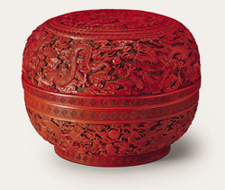
This story is for an assignment from Wordsmith's Unlimited. Read the original assignment HERE.
“What in tarnation?!”
Ennis stepped back out onto the porch to watch the UPS delivery van try to make its way back up the rutted gravel drive that led to his house up in the holler. The driver had just thrown the package up on the porch rather than navigate the sea of blue tick hounds and dead cars in the yard. Its wheels stuck and spun a few times in the mud but it finally made its way back to the main road.
He squatted down on his haunches and turned the red box around in his hands, then spit a stream of tobacco juice out into the bare dirt yard. It barely missed a game hen scratching for bugs in the dirt. He wondered how much he could get for the box at the pawnshop in Newport. He wondered if it were worth anything.
Probably not, he thought, since the damn thing wouldn’t open.
He stood and scuffed his worn boots on the weathered wood of the porch. He’d been expecting a delivery but this sure wasn’t the immersion heater he’s ordered for his still operation. And he sure as hell needed the damn thing since he was almost out of quart jars and needed to do another run.
“Ennis? What were that?”
He turned to see his woman standing there in her tattered housedress. Her hair was mussed from sleep, its brassy blond ends contrasting sharply to the blue-black roots next to her scalp. The left side of her face was creased with sleep lines and she hadn’t put her teeth in yet.
Wordlessly, he handed the red box to her.
“Awwww, this here’s right purty!” she crooned as she caressed the box. “Where’s it come from?”
Ennis let another stream of tobacco juice snake out into the yard.
“Think it h'ain’t s’posed to be here.” He said with his long gaze fixed toward Snowbird Mountain, etched against the Tennessee sky.
Later that day, in Charleston, SC, Mrs. Davies-Smythe, in her elegant home on the Battery, tearfully opened a package to find an odd piece of hardware, an immersion heater, instead of Mr. Davies-Smythe’s cremains.
“What in tarnation?!”
Wednesday, December 27, 2006

I spent quite a few hours today at Big Creek Market and Deli. It's the local watering hole and  greasy spoon. Mostly folks just come in and hang out. It's not a smoke-free environment. The air is redolent with the smell of sausage and ham sizzling on the grill in the back. They most probably use lard. You can get a grill cheese sandwich or just about anything to fortify your daily allowance of vitamin "G". The food is actually really good, but be sure to bring your lipitor with you. It's a down home country grill. They open at 5 am during bear season.
But mostly people come for the gossip.
I was there trying to rip a copy of Akira Kurasawa's Kagemusha and some older titles on Bubba's ancient Windoze machine...and in the process try to figure out exactly why he was having trouble ripping DVD's on his machine. Part of the problem seemed to be that he didn't have a DVD burner. I had a really hard time convincing him that it wasn't there. It doesn't seem to matter how many times I explain that I have drunk far too much of Steve Job's coolaide and only sort of know my way around a PC, I still get called out to fix the local computers. They really think I'm smarter than I actually am.
So, it is now all over the mountain that I watch "jap" movies with subtitles...in black and white no less. It would have been okay if I could have confirmed when asked that they were "kung-fu" movies. But I couldn't, so that is no doubt another brick laid on my merry road to hell. Between the fact that my church uses real wine for communion and this...well, I guess there's just not much hope for me.
An old buddy of mine was there. He is a font of stories, but it's really hard to get him to talk without him lapsing into dirty jokes with an agricultural theme.
Today he told me, "I wuz born on the mountain and lived in a cave."
The cave part isn't true and there was some punchline that I didn't quite get or catch....something about why he was always "hankerin" for something. It was probably risque in his fashion. But he was indeed born up on Hall's Top.
He had told me once before that he didn't get his first pair of shoes until he was 12 years old. I asked him how he got around in the winter.
"Well, we just didn't go out much."
I also asked him about how old he was when he first went into Newport. I knew that some people lived their lives here without ever going to the closest town.
"Weeeelll, I guess I were about them boy's age." he said, pointing toward a young man dressed in RealTree cammo who is about 17 or so.
"H'it were called Cabbage County 'cause my Daddy'n'em raised cabbages. One day we took all them cabbages ter market."
He pulls a long drag off of his hand-rolled cigarette with those amazingly weathered hands.
"We hitched up the ox and took them 'long the river all the ways to Newport. Lord, I thought that were the furthest piece!"
Oxen, while very sturdy, are not very fast. The drive he's talking about is about 15 to 20 miles. I can only imagine what that must have been like, riding on the bumpy gravel road in a wagon full of cabbages. That road is now a pleasant drive over a nice blacktop, but during his time it was a rutted, one lane path that was probably washing out into the Pigeon River in places.
"So, tell me," I ask, "Where did you go to school?"
"I only went one day." He tells me. "H'it were up at Raven's Branch."
I knew about the Raven's Branch school.
"One day?" I ask.
"Well, I only had one pair of britches and the goat ate them. So I didn't go back."
***************************************************
Speaking of goats...still waiting, damnit!
Thursday, December 14, 2006
 The Indians called this place "Shaconage". The land of blue smoke. It fairly seems to cry out for misty figures who fade in the fog and leave no footsteps in the wet springs where they tread.
But the reality and history here is so much more fascinating. I have yet to hear one ghost tale related to me by someone who actually grew up here.
Once, I brought a couple of filmmaker friends from Asheville to visit a local woman. They had come to visit me for the day and wanted to make a film based on Appalachian ghost stories. I really didn't have any ideas for them, but was able to get her to retell my favorite eerie, but true story.
There is a sheer rock face across from my house. It rises three hundred feet in the air from her north pasture. The top was once cleared and a small homestead used to sit on the edge of cliff. A young woman with two children lived up there with her old father. They farmed the steep slopes on the other side with steers.
They used to plant corn in places no one could plant today. You can still see the little terraces on the sides of the mountains where the steers pulled the plows.
She was married once. But the man took off to live with another woman down in the holler, leaving her with the two babies, a toddler and an infant.
I'm not sure exactly what the grim tale was about the relationship between the girl and her father. Maybe he was just mean as a snake. Maybe he drank. I'm just not sure, but for whatever reason, the two did not get along. She was dutiful, though, and was taking care of him in his later years.
It happened on one of those cold, cold nights we have here in the mountains. The sleet and snow was hitting the tin roof of the cabin, being driven by 40 mile per hour gusts. The wind sounded like a panther cry, like a woman screaming. It was on a night like this that the old man decided to die.
As he lay dying by inches and on his last night on earth, he cursed his girl.
"Mark my words, girl," he told her, "for as sure as I'll die on this night, I'll come back and haunt you. I'll drive you mad for sure. You see if I don't!"
As the warmth seeped out of his now dead body in the middle of a cold winter night, the daughter made up her mind. She bundled up her two young ones and scaled down the cliff with them in the dark, in the snow and driving ice and wind. She arrived at the woman's house seeking shelter late that wintery night.
Her hands were cut and torn from her climb down the sheer rock face. She had bruises over most of her body and was shuddering with cold. It was a miracle that she didn't plummet to her death. It was a greater miracle that neither of the babies had a scratch on them.
The next morning she left the two babies with their father and went to Knoxville. She checked herself into what was then known as the "Sanatorium" but is now the State Mental Institution. I suppose she expected her dead father to make good on his promise to drive her insane, and thought it best to be in an appropriate place when it happened.
Many years later, the woman tried to go get her and bring her home, thinking the fear might have gone out of her.
The woman looked at her over the steaming vats of laundry with haunted eyes.
"This would be my home now." she told her.
She lived out the remainder of her days at the Sanatorium, patiently waiting to go insane.
There are no ghosts here. The dead still live with the living.


